“Hypercasual” and “hybrid-casual” are useful design shorthand, but chart snapshots do not certify either label. Our 17 November 2026 US App Store sample places three very different products in the same broad casual conversation: Paper.io 2 by Voodoo ranked #13 in Casual; Block Blast! by Hungry Studio ranked #9 in Games and #6 in both Casual and Puzzle; Triumph Arcade ranked #14 in Casual. Every rank claim here means US App Store, as of 17 Nov 2026. A chart is a moment, not a download, revenue, or retention report.
We read this sample as evidence that a tiny first action can sit beside deeper repeat structures, and that store categories blur product models. Paper.io 2 foregrounds a short territorial contest. Block Blast adds multiple ways to continue a familiar board puzzle. Triumph Arcade packages a catalog around skill contests. Comparing them is more useful than declaring a single winner of “hybrid-casual.”
What do hypercasual and hybrid-casual mean in practice?
We use hypercasual for an experience whose promise is understood almost immediately: one action, rapid feedback, little setup. Hybrid-casual keeps that accessibility while adding durable reasons to return, such as progression, collections, modes, events, or a more developed economy. These are working definitions, not official store taxonomy. A title can have a simple core and still not fit neatly into either box.
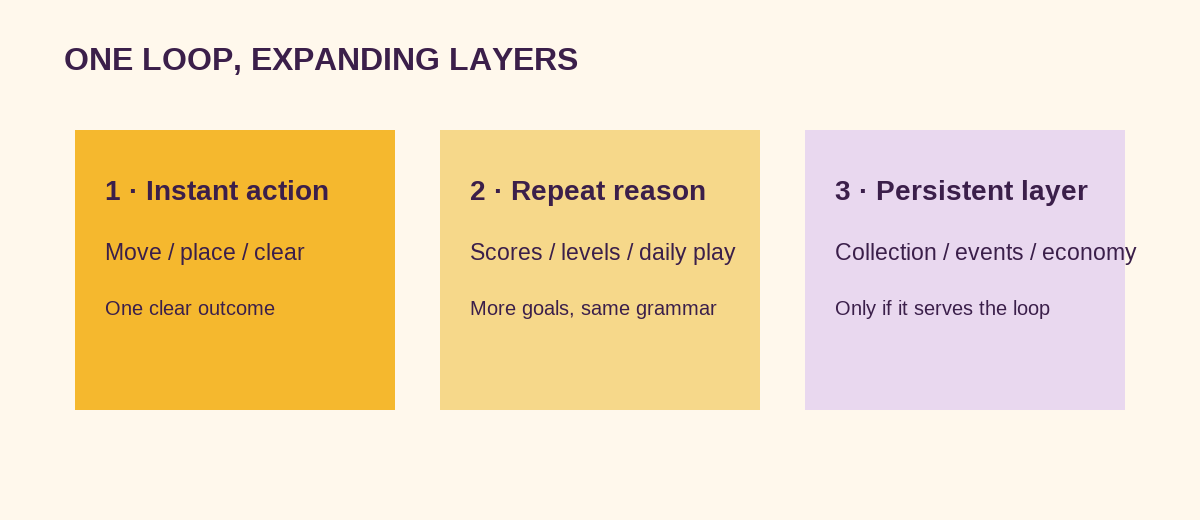
Those outer layers cost production and tuning effort. They should deepen the original pleasure, not distract from a loop that has not yet earned another system. Our related small-team LiveOps guide makes a similar case for earning the right to add recurring operations.
Three chart examples, three different shapes
Paper.io 2: a compact territory gamble
The App Store listing describes moving around an arena, drawing a trail to grow territory, and claiming the zone before another player cuts the trail. It also lists online multiplayer, collectible skins, daily rewards, advertising, and in-app purchases. We read the core tension as a simple risk loop: leave safety to claim more space, then return before the exposed path is interrupted. More territory is both progress and added exposure.


This is a strong example of an immediate-action game with return hooks around it. The listing’s daily rewards and skins suggest repeat and collection layers; the store confirms ads and purchases, including a no-ads item and currency or cosmetic offers. That does not tell us how often ads appear, how purchases convert, or whether those layers caused its rank. We should not infer commercial performance from chart placement.
Block Blast!: one board, several reasons to return
Hungry Studio’s listing explains an 8×8 board: drag blocks into place, complete rows or columns, score, and keep enough open space for future pieces. It describes an endless high-score pursuit, Adventure Mode with progressive levels and themed jigsaw designs, daily puzzle challenges and rewards, plus in-app purchases. We read that as a clear hybrid-casual shape: the familiar placement grammar remains stable while modes and daily goals give the same action different horizons.


The base loop creates a pacing problem by design: every placement is understandable, but each consumes scarce board space. Skill grows through planning clearances and preserving options. The daily and progressive layers can create a softer cadence around an open-ended score chase. The public listing verifies IAP availability, but does not specify the purchase catalog or whether ads appear, so we leave those details open.
As of the snapshot, Block Blast! held #9 in Games and #6 in Casual and Puzzle—US App Store, as of 17 Nov 2026. That breadth suggests its store positioning crosses labels; it does not prove why players chose it. The listing’s large ratings count in the snapshot is historical accumulated feedback, not a measure of current active users.
Triumph Arcade: competition as the persistent layer
The snapshot lists Triumph Arcade in Casual at #14—US App Store, as of 17 Nov 2026—but its own documentation describes a platform for skill-based contests, player matching, leaderboards, and prizes, with practice play in most games. That makes it a useful boundary case: the return structure can come from a competitive platform wrapped around multiple game experiences rather than a single puzzle’s collection or level map.


The App Store listing identifies advertising and contests in its age/content information; official Triumph documentation says some tournaments have entry fees and prizes, and practice options are available in most games. We mention this only to explain product structure, not to recommend cash competitions. This model carries operational, geographic, fairness, and compliance requirements that are far beyond what a small casual studio should copy casually. It also shows why “casual chart” does not necessarily mean “low-complexity business.”
What can a small studio learn from this snapshot?
- Make the first action self-explanatory. Paper.io 2’s trail and Block Blast’s grid both communicate action through the playfield. Prototype the first ten seconds before adding tutorial text or account gates.
- Let tension come from the rule. Territory exposure and limited board space create consequences without a large feature list. Build one decision that changes the next decision.
- Add a second horizon, not a second game. A daily challenge, a score target, or a sequence of handcrafted boards can extend a stable loop. Test whether players understand the new goal without re-learning controls.
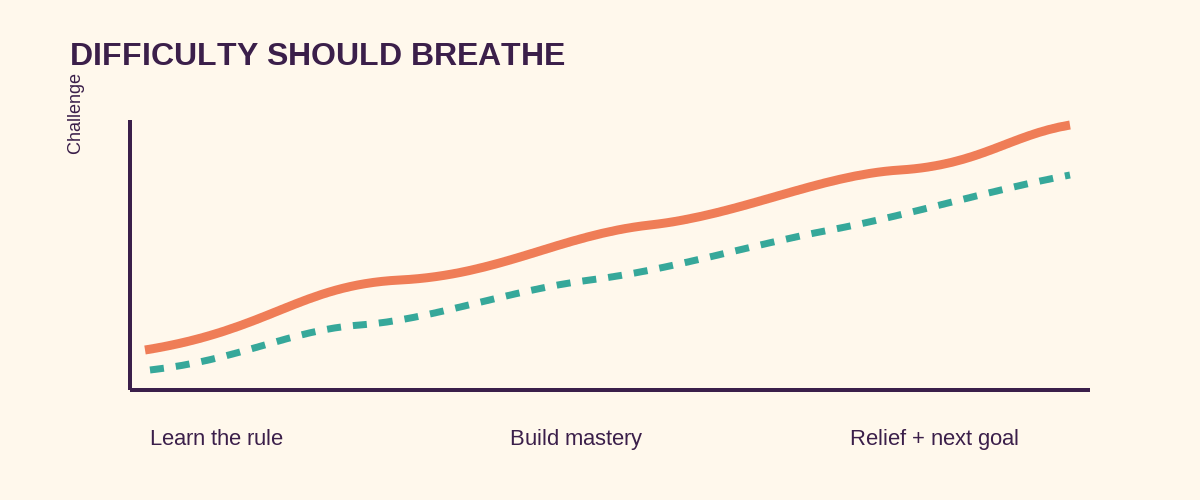
- Use progression to pace effort. Alternate mastery with moments of relief. If every session demands greater intensity, a short game can become tiring; if nothing changes, skill has no visible payoff.
- Match monetization to player intent. Ads and optional purchases are visible in some listings, but the snapshot does not show placement or player response. For an indie prototype, evaluate interruption, fairness, and purchase clarity alongside revenue.
How to test your own hybrid layer
Start with one core loop and one return mechanism. For example, test a personal best plus a daily seeded puzzle before building a season pass. Define a simple question—does the new goal improve repeat play without hurting completion or satisfaction?—then compare exposed and unexposed cohorts where your audience size allows. A chart rank alone cannot answer that question.
Keep difficulty legible. Introduce a new constraint after a player has learned the current one, and provide space to apply it. In a block puzzle, that might mean changing available shapes or board objectives in a curated stage; in a territory game, it might mean a new arena rule. These are design ideas, not claims about the cited games. Our puzzle design guide covers readable goals and feedback, and NabiGame’s Juice Fruit shows one of our own casual puzzle projects.
For monetization, map each offer to a player moment and make the trade clear. Ads may fund free access but can break a short-session rhythm if they interrupt the satisfying beat. IAP can support cosmetics or convenience, but should not make the underlying rule feel unfair. A pass adds recurring content obligations; add it only when the team can sustain rewards, support, expiry rules, and localization. No public evidence in this snapshot lets us compare the three titles’ revenue or ad yield.
Read the chart carefully
Our source is a public Apple App Store chart snapshot stored with this project. It records rank and app metadata on one date; it does not expose installs, user acquisition spend, active users, session length, retention, or revenue. The metadata includes developer, release date, ratings count, icon, and official listing screenshot URLs, but those are not causal explanations for chart position. We use the store descriptions for mechanics and declared features, and treat design implications as our analysis.
For a small studio, the practical lesson is not “make a hybrid game.” It is: make the core action satisfying, then add the smallest repeat structure that players actually value. In this snapshot, simplicity and depth appear in different proportions across all three examples. A focused prototype and careful observation will teach your team more than copying a genre label.
Sources
- Apple App Store: Paper.io 2
- Apple App Store: Block Blast!
- Apple App Store: Triumph Arcade
- Triumph Arcade official regulatory and product FAQ
- Apple App Store chart snapshot:
data/top-games/2026-11-17-us.json(captured 17 Nov 2026)
As of 17 Nov 2026. Chart positions are snapshots and may change. We are not affiliated with the studios discussed.
Comments
Loading comments…