
Magic Sort! takes a familiar water-sort puzzle and gives it a broader reason to continue: solve a board, earn progress, and return to a colorful wizarding world with tools, challenges, and collection hooks. The US chart snapshot places it at #3 in Games, Casual, and Puzzle — US App Store, as of 17 Nov 2026. That is a useful signal of visibility, not proof of why players chose it or how much it earns. We read its appeal as a combination of instantly legible play, satisfying visual completion, and optional layers around the puzzle.
Key takeaways for small studios
- Make the first move obvious: teach one action, then let the board explain the goal.
- Turn mastery into a visible journey: attach optional goals and collection to the core action.
- Use helpers to protect flow: explain what a tool changes and preserve meaningful decisions.
- Monetize choice, not confusion: keep ad and purchase offers separate from puzzle rules.
- Measure the whole loop: a chart position is a snapshot; test whether progression sustains return play.
What is Magic Sort?
Magic Sort! is a free puzzle game from Grand Games A.Ş. The listing describes the familiar water-sort rule: tap a bottle, pour onto a matching top color where space remains, and finish with one color per bottle. It also describes undo and shuffle tools, magical boosts, and ingredients used to brew stronger magic. These are listing claims; exact balance, availability, and level sequence can change by version. See the App Store listing for its current presentation.

This mechanic works because each move changes a compact state the player can inspect. The game asks for planning without requiring a long tutorial: color groups are visible, empty capacity is visible, and a mistaken pour can create a familiar bottleneck. Our interpretation is that the magic theme gives a soft identity to a broadly understood sorting puzzle, while the central action remains recognizable within seconds.
Why does the loop feel satisfying?
Small decisions create readable progress
A pour is both an action and feedback. Liquid moves, colors consolidate, and a bottle becomes closer to completion. The listing’s screenshot sequence presents the sort, a challenge, a win, and rewards as a coherent path. That is not evidence of a particular retention result, but it shows how the store frames the experience: understand the puzzle, overcome a hurdle, see a win, and receive a reason to continue.

Difficulty can deepen without replacing the rule
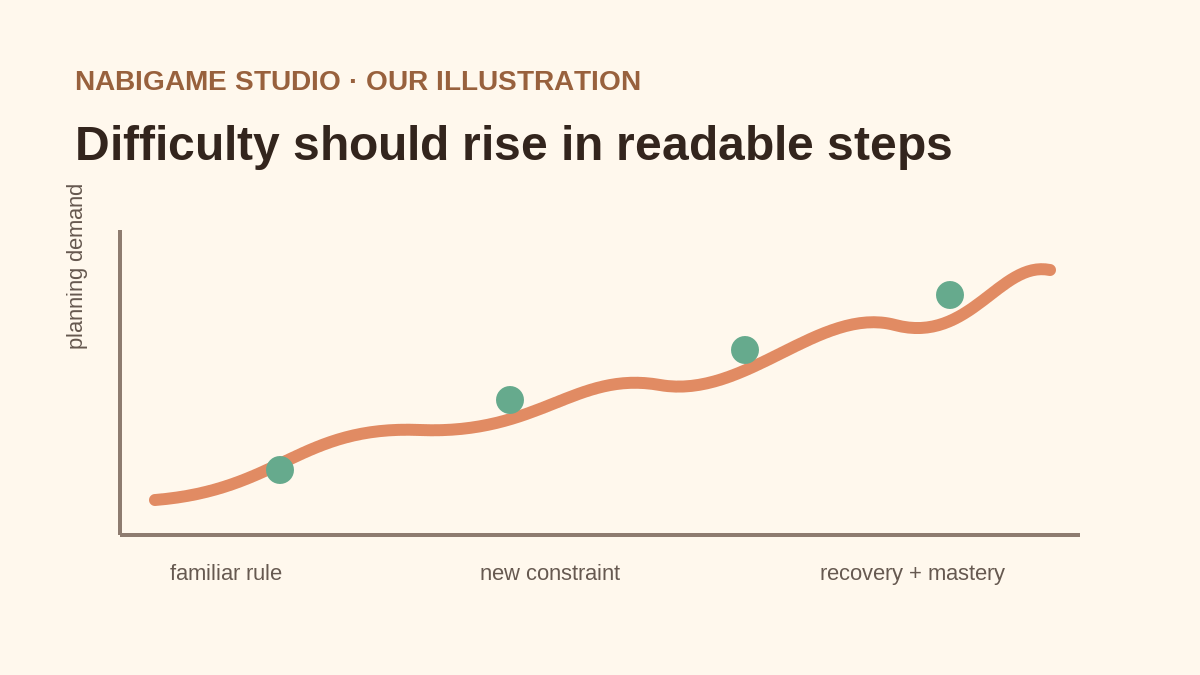
In water sort, difficulty can rise by changing the number and arrangement of colors, available empty bottles, or added constraints. We cannot infer Magic Sort’s exact tuning curve from a store snapshot, so this is a design reading of the genre rather than a verified level audit. The useful principle is gradual demand: let players learn to plan several moves ahead before introducing a constraint that changes their assumptions. A failed level should teach something about state management, not feel like a surprise rule.
One caution: a puzzle can feel calm moment to moment while its progression system creates urgency elsewhere. A studio should inspect whether lives, timed challenges, or limited-use helpers create pressure that contradicts its intended mood. This is a test question, not a claim about a specific current level or offer in Magic Sort.
What sits around the puzzle?
The listing highlights challenges, tools, and ingredients, while its screenshots also show earn and discovery beats. Together, those suggest a layered structure: the board provides the repeatable activity; external goals can make a solved level count toward something beyond the board. We read this as a way to widen the motivation mix without discarding the sort mechanic.

For a small team, the distinction matters. A meta layer should amplify the satisfying action, not compete with it. If a collection asks for play that feels unrelated, it becomes a second game to maintain. A compact event can instead count completed levels, introduce a themed milestone, and offer an optional reward. We discuss sustainable event scope in our LiveOps guide for casual and puzzle games. Our own Fruit Merge: Juicy Puzzle is a different mechanic, but it shares one useful design question: how can an ordinary move visibly contribute to a longer arc?
How does monetization fit?
The App Store listing labels Magic Sort free with in-app purchases and advertising, and includes coin packs and named bundles among its listed purchases. The listing does not establish the live price or exact placement a given player sees; offers can vary by region, platform, and time. We will not infer revenue or conversion from those purchase options.

That combination suggests a familiar free-to-play toolkit: ads can support optional rewards or interruptions, while IAP can sell currency, bundles, or convenience. The precise ad placements and pass structure are not verified here. We read the opportunity and risk this way: helper items can make a difficult board less brittle, but if they appear to be the only practical route past a level, players may read the economy as pressure rather than assistance.
Our recommendation to a small studio is to keep each offer legible. Explain the tool’s effect before presenting a purchase. If rewarded ads exist, make the reward and viewing choice explicit. If an ad-free purchase exists, spell out what it removes. Avoid using a timer or a difficult board to obscure what the player is buying. Then compare level completion, retry behavior, ad engagement, purchase uptake, and player feedback across cohorts. Correlation alone cannot show that an offer caused a change.
Why might it be charting?
Three explanations look plausible, though none is confirmed by rank data alone. First, the core action is easy to understand in a short video or store image. Second, the theme and character framing give a familiar sorting mechanic a distinct presentation. Third, optional challenges and rewards may broaden the reasons to continue for players who want more than a sequence of isolated boards. The listing itself supports these as product elements; whether they drive acquisition or retention requires behavioral evidence.
Our snapshot’s #3 position in three related US App Store categories — US App Store, as of 17 Nov 2026 — shows strong chart visibility at that moment. It does not tell us install volume, revenue, paid-media spend, retention, or how long the position lasted. The app snapshot separately records its 2024 release date, rating, and ratings count, but those should not be confused with current chart rank or causal evidence. See the snapshot source and store page below.
Four practical lessons to borrow
- Show the state, not a wall of instructions: use color, capacity, and animation to teach legal moves. Offer undo as a learning tool where possible.
- Earn complexity: add one new constraint at a time, then let players apply it in a few low-stakes boards before combining constraints.
- Make the meta optional but meaningful: let regular play contribute to a collection or event, and ensure skipping it does not hollow out the puzzle.
- Audit fairness at friction points: review hard levels, helper costs, rewarded ads, and continue choices as one connected economy. Ask testers whether they understand the choice and feel they can decline it.
For a studio, these are hypotheses to test rather than a recipe to copy. Magic Sort’s particular art, audience, and operating cadence belong to its maker. A small puzzle team can borrow the clarity of the loop and the discipline of layering, then tune both to its own audience and production capacity.
Sources
- Magic Sort! App Store listing — mechanics, features, developer, release and listing information, rating and purchase disclosures.
- NabiGame US App Store chart snapshot, 17 Nov 2026 — category ranks and app metadata.
As of 17 Nov 2026: rank statements refer to US App Store snapshot only. Features and store disclosures may change; this article is analysis, not an affiliation with Grand Games.
Comments
Loading comments…